

There’s A Place On Earth Where Lightning Strikes Almost Every Night
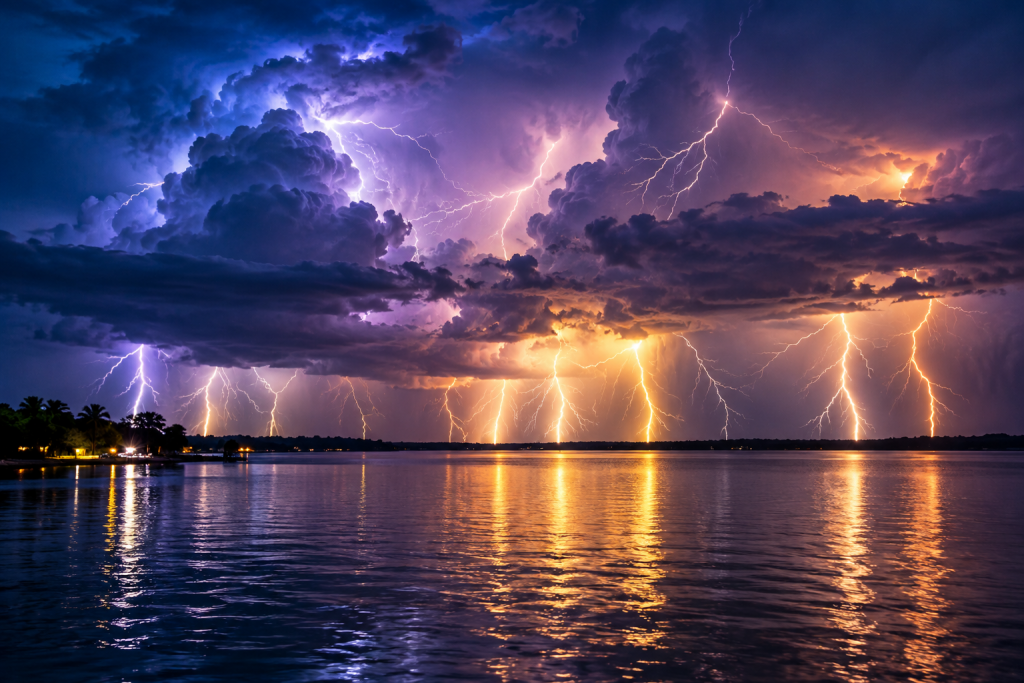
A Sky That Refuses To Stay Dark
Imagine looking across a lake at night and seeing the sky repeatedly explode with flashes of lightning.
For people living around Lake Maracaibo in Venezuela, this extraordinary display is part of a real weather phenomenon commonly known as Catatumbo lightning.
Lake Maracaibo is one of the most lightning-active places on Earth. Satellite observations have helped scientists measure just how unusual the area really is. NASA reports that the region averages about 389 lightning flashes per day, giving it the highest flash extent density measured in its global analysis. NASA Science
Why Does So Much Lightning Happen Here?
The answer appears to lie largely in geography and weather.
Lake Maracaibo sits in northern Venezuela, surrounded by terrain that helps create conditions favorable for thunderstorms.
Warm, moist air from the lake and surrounding region interacts with cooler air associated with nearby mountains. These conditions can encourage powerful convection, the rising and movement of air that helps thunderstorms develop.
NASA describes the area’s unique geography as helping fuel weather patterns that make it a magnet for thunderstorms and lightning. NASA Science
The Lightning Can Turn Night Into A Light Show
Not every flash of lightning travels from a cloud all the way to the ground.
Lightning can also occur inside clouds or between clouds. These types of discharges can illuminate large sections of the sky, sometimes creating the appearance of enormous sheets of light behind the clouds. International Cloud Atlas
When thunderstorms repeatedly develop around Lake Maracaibo, the result can be an astonishing nighttime spectacle.
From a distance, flashes may appear one after another across the horizon, creating a natural light show that few places on Earth can match.
Satellites Changed What We Know About Lightning
Scientists once had a much harder time determining which places received the most lightning.
That changed with satellites.
Lightning sensors operating from space have allowed researchers to observe storms across huge portions of Earth and create detailed maps showing where lightning occurs most frequently.
NASA says satellite observations since the 1990s have significantly improved scientists’ ability to measure and map lightning around the world. NASA Science
Those observations helped establish Lake Maracaibo as one of Earth’s extraordinary lightning hotspots.
Lightning Is More Than A Beautiful Show
As incredible as Catatumbo lightning looks, lightning is dangerous.
The World Meteorological Organization notes that lightning causes deaths and damage around the world and can contribute to fires and damage electrical infrastructure. World Meteorological Organization
A spectacular lightning storm should therefore be admired from a safe location, not chased outdoors for a better view.
One Of Nature’s Strangest Nighttime Shows
We normally think of thunderstorms as temporary events that roll in, make some noise, and disappear.
Lake Maracaibo shows just how unusual Earth’s weather can become when geography, moisture, heat, and atmospheric conditions come together in the right place.
In this corner of Venezuela, darkness can arrive only for the sky to begin flashing again.
And unlike a city light show, no one has to flip the switch.
Nature does it all by itself.
Sources
NASA Earth Observatory: A New Look at Earth’s Lightning
World Meteorological Organization: Lightning and Global Climate Observations
World Meteorological Organization: Types of Cloud Lightning